920.831.2285






Packaging does far more than contain a product — it simultaneously shapes durability, cost, sustainability and brand perception. The challenge for today’s leading companies is finding solutions that protect their goods without driving up expenses or compromising the customer experience.
That choice carries real-world consequences. Flimsy materials can expose products to moisture, crushing or impact damage, while poor sealing or inadequate cushioning will increase the risk of returns and dissatisfied customers.
Quality packaging safeguards products, supports eco-friendly goals and reinforces brand trust. Selecting it will help your businesses meet operational demands and environmental expectations while staying competitive in a crowded market.
Different Types of Packaging Materials
Materials used for packaging fall into distinct categories, each engineered for specific performance requirements. Understanding their structural differences and optimal applications ensures you select the ideal consumer packaging for your product’s journey.
Corrugated Fiberboard
Corrugated fiberboard is a fluted paper wave trapped between two flat sheets that creates exceptional strength using minimal material. The fluted architecture acts like a series of columns, distributing weight evenly while providing a cushioning effect.
Since this structure delivers the packaging industry’s best strength-to-weight ratio, corrugated materials handle everything from standard shipments to industrial machinery. Corrugated fiberboard’s versatility extends across a wide range of temperatures and humidity levels, maintaining integrity where other materials fail.
Its applications include:
- Shipping cases that survive distribution networks
- Master cartons protecting retail-ready packages
- E-commerce boxes engineered for automation
Solid Bleached Sulfate
SBS is a premium packaging material made from virgin wood fiber and coated with clay for smooth, high-quality printing. Its bright white surface makes graphics stand out, with vibrant colors and sharp text, even at smaller sizes. Special effects such as foil stamping give it a luxurious look.
The consistent thickness and fold quality of SBS make it ideal for high-speed packaging lines. Brand managers often choose SBS for packaging that directly influences purchase decisions, such as:
- Pharmaceutical cartons requiring precise color matching
- Cosmetics packaging designed to stand out
- Frozen food boxes that resist freezer moisture
- Electronics packaging that reflects premium quality
Coated Recycled Board
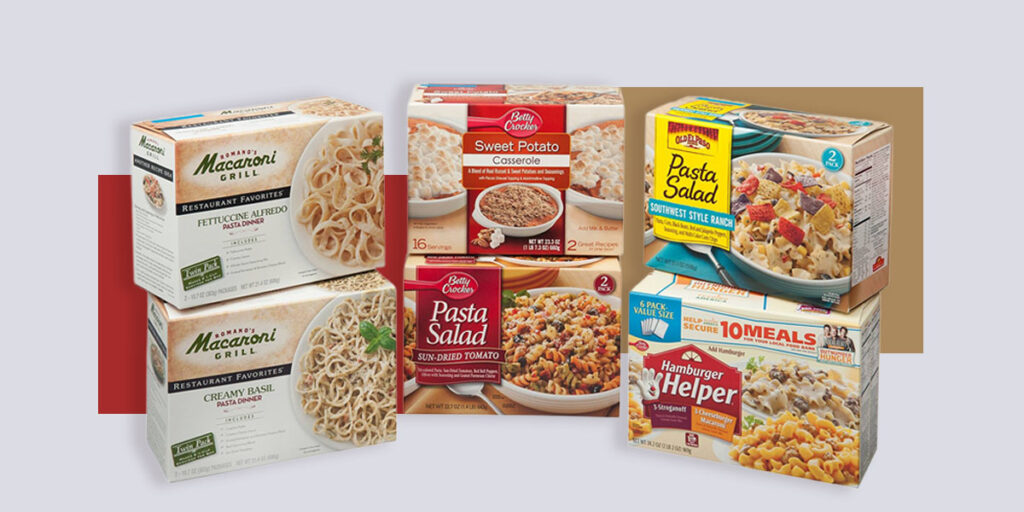
Coated recycled board offers a professional look at a lower cost, combining recycled content with a clay coating that supports four-color printing. Its 100% recycled composition makes it an attractive choice for environmentally conscious consumers.
While slightly less rigid than virgin materials, CRB is still sturdy enough for most retail applications. The clay coating creates a smooth surface for clean, sharp graphics, though fine details may require SBS. CRB is an excellent option for everyday packaging:
- Cereal and cracker boxes
- Dry goods packaging that highlights sustainability
- Private-label products balancing quality and cost
- Promotional packaging for limited runs
Solid Fiber and Chipboard
Solid fiber and chipboard are compressed paper materials that provide rigid support without the bulk of corrugated packaging. Chipboard’s density resists punctures, making it a dependable choice for dividers that protect fragile items. Solid fiber’s laminated layers offer moisture resistance and strength, often replacing wood in various settings.
Common applications include:
- Partition sets for multiunit shipments
- Backing boards to prevent deformation
- Slip sheets substituting for wooden pallets
- Die-cut inserts for securing irregular items
Protective Packaging Materials
Protective packaging ensures products remain safe during transit and storage. From cushioning to edge protection, these materials allow products to arrive in optimal condition while supporting sustainability.
- Paper and plastics corrugated: Made from paper and plastic, available in single-face, single-wall or double-wall options, with laminated buildups for spacers and pallet blocks.
- Biodegradable foam: A sustainable alternative to traditional foam, offering cushioning and protection while being fully biodegradable.
- Thermoformed plastic: Molds plastic sheeting into custom three-dimensional components using heat.
- Honeycomb: Provides void fill and support with paper-based material made from kraft or recycled paper.
- Paperboard edge protection: Reinforces edges and corners with durable, 100% curbside recyclable paperboard.
- Expanded polystyrene: Creates lightweight, cost-effective parts from molded polystyrene beads.
- Molded pulp: Forms shapes from recycled paper, offering recyclability and biodegradability.
Technical Specs — Comparing Thickness and Durability
Packaging performance depends on measurable properties. Understanding these helps you select materials that protect without overengineering.
Understanding Caliper
Caliper, measured in thousandths of an inch (points), directly impacts rigidity and protection. For example, an 18-point SBS carton feels substantial and folds predictably. At 24 points, it becomes rigid enough for gift boxes, maintaining shape without internal support.
Standard thickness ranges by application.
- Folding cartons: 12 to 18 points for lightweight products
- Premium packaging: 20 to 24 points for added value
- Chipboard dividers: 30 to 50 points for structural support
Corrugated uses flute profiles to determine thickness and cushioning.
- A-flute (1/4″): Maximum cushioning for fragile or heavy items.
- E-flute (1/16″): This profile is for high-quality printing.
- B-flute (1/8″): Durable crush resistance for mid-weight products.
- C-flute (3/16″): Balanced shipping protection for general use.
- BC double-wall (about 1/4″ to 5/16″): Combined heavy-duty strength for industrial or demanding applications.
Strength Testing
Two tests predict real-world performance and ensure packaging can withstand transit and handling.
- Edge crush test: Measures stacking strength. For instance, a 32 ECT box supports up to 65 pounds, ideal for palletized shipments.
- Burst strength: Measures resistance to punctures. Higher burst strength helps prevent damage from forklift impacts and conveyor jams.
Companies with large inventories are best off prioritizing ECT when choosing between solid fiber and corrugated, as compression resistance is typically more critical than puncture protection.
How to Choose the Right Packaging for Your Product
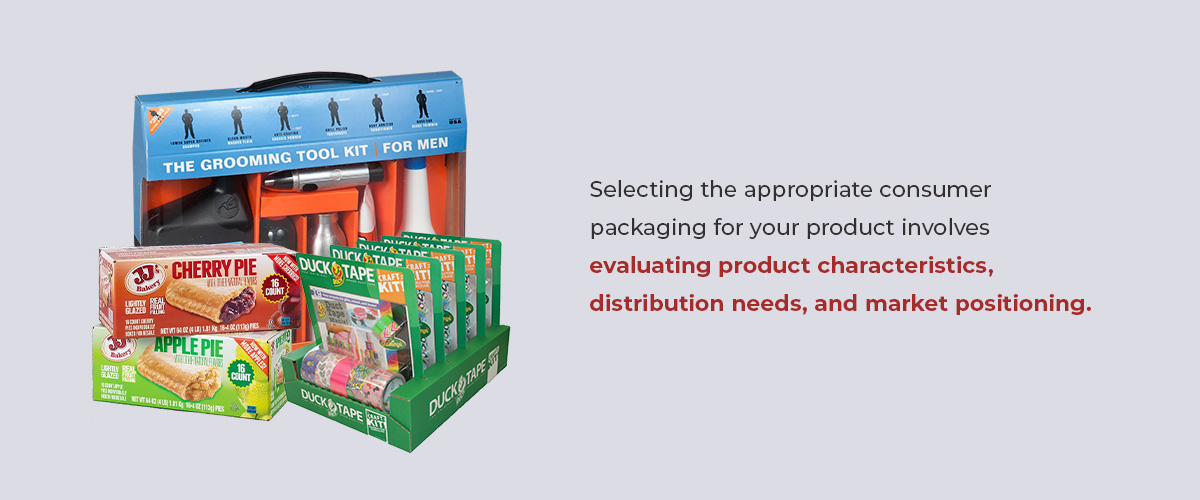
Selecting the appropriate consumer packaging for your product involves evaluating product characteristics, distribution needs, and market positioning. Each of these factors impacts material choice differently.
Product Weight and Fragility Assessment
Weight is the primary consideration. Products under 2 pounds fit well in folding cartons, while anything over 5 pounds often requires corrugated support. But weight alone doesn’t determine needs. For example, a 1-pound ceramic mug requires more protection than a 5-pound bundle of clothing.
Consider drop testing results and damage history. If the current packaging consistently shows failure points, it’s worth upgrading the thickness or switching to a different material. Fragile items benefit from corrugated fiberboard’s shock absorption even at lower weights.
Distribution Journey Mapping
Map your product’s path from production to consumer. Direct-to-consumer shipments face automated sorting, multiple transfers and final-mile handling, making corrugated packaging essential.
Retail distribution uses protective master cases, allowing primary packaging to focus on shelf appeal over shipping durability.
These factors add stress to the distribution process:
- Cross-country trucking causes vibration fatigue.
- Coastal shipping introduces humidity exposure.
- International transport demands extended durability.
- Seasonal peaks strain handling capacity.
Environmental Exposure Requirements
Packaging must withstand the conditions it will encounter. Products stored in refrigeration need moisture-resistant coatings to preserve integrity, while those exposed to humidity require water-resistant materials to maintain strength.
Temperature fluctuations affect materials differently, with corrugated packaging offering better stability than solid fiber during freeze-thaw cycles. Additionally, products exposed to chemicals, such as cleaning supplies, require barrier coatings to protect the packaging and its contents.
Print and Branding Specifications
Brand requirements often determine material selection. Photography-heavy designs demand SBS’s smooth surface, while bold graphics work effectively on CRB.
Other examples include:
- Metallic inks that need clay-coated substrates.
- Window patches that require precise die-cutting.
- Soft-touch coatings to add a premium feel.
- Food contact, which requires FDA-compliant materials.
Matching the Material to the Market Channel
Sales channels have varying packaging requirements. Here’s what works best for each.
- Mass-market and club stores: Corrugated is preferable for 10-foot pallet requirements and forklift handling. B-flute is minimum. Hybrid solutions with corrugated structure and litho-laminated graphics are effective.
- Standard retail shelves: SBS or CRB folding cartons boost brand differentiation and shelf appeal.
- E-commerce and direct-to-consumer: Corrugated endures automated systems and multiple touchpoints. E-flute offers a balance of protection and cost, while frustration-free designs eliminate the need for void fill.
Making Your Material Decision
Choosing poor-quality consumer packaging material can adversely affect your revenue and brand reputation. Crushed cartons and environmental exposure leading to damaged products and lost stock will increase costs. Packages that arrive at their destinations in one piece may still leave customers dissatisfied if their orders sustained harm during transit.
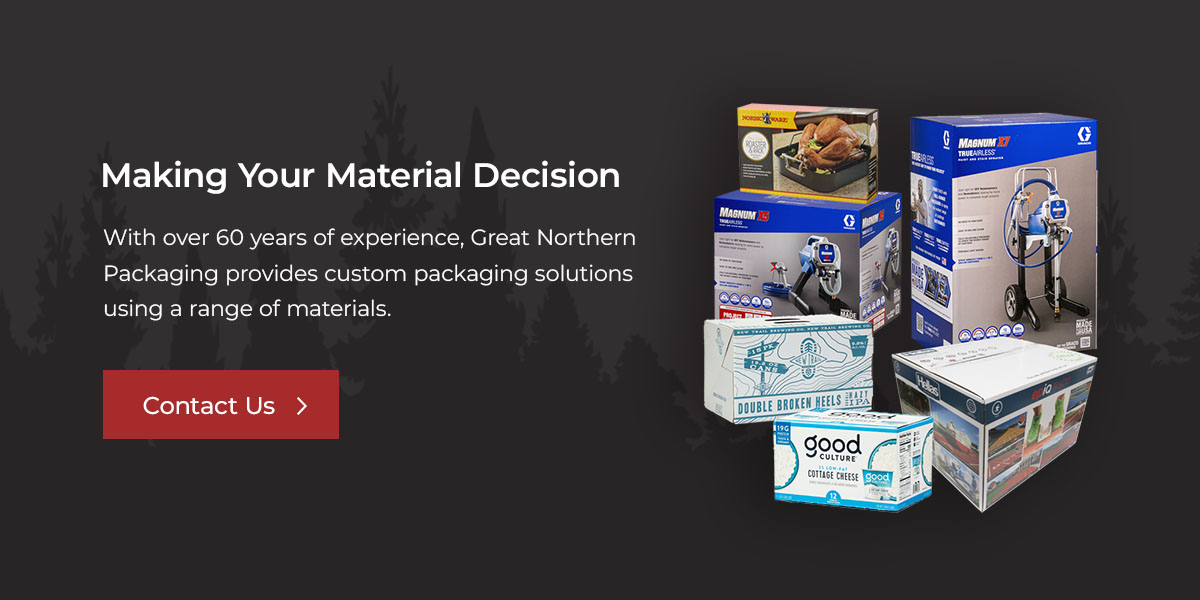
With over 60 years of experience, Great Northern Packaging provides custom packaging solutions using a range of materials. By engineering solutions that blend structure, protection and print performance, we create packaging that works across shipping, retail and e-commerce. Our customization capabilities allow us to fine-tune each material choice, so you receive the exact level of protection and branding your product requires.
Contact us today to discuss material solutions for your packaging and start optimizing your product’s performance on the shelf.