920.831.2285






Shipping costs increase when businesses need to purchase new packaging materials. At the same time, recycling systems handled over 33 million tons in 2024, demonstrating the significant amount of packaging removed from service each year. This total includes large volumes of corrugated shipping boxes that may still have a usable life.
This waste drains your budget and accelerates environmental damage through unnecessary resource use and manufacturing emissions.
Reusing shipping boxes reduces your packing expenses and carbon footprint by keeping them in circulation longer. But not every box deserves a second life. Damaged or weakened shipping boxes compromise product protection and your brand reputation.
Having an organized inspection protocol helps you separate reusable boxes from those destined for recycling, so your cost savings never compromise your delivery quality.
Can You Reuse Shipping Boxes?
Yes, you can reuse boxes for shipping, but it needs to be an intentional operational decision rather than just an informal way to cut costs. Reuse works best when you evaluate box condition, labeling, load requirements and carrier expectations consistently across shipments.
Packaging Standards and Requirements
For general shipping, reuse is primarily governed by carrier packaging guidelines and practical performance expectations, rather than a single federal reuse rule. Boxes must withstand regular transport stresses such as stacking, vibration and manual handling without compromising product protection or shipment flow.
Carriers typically enforce these principles:
- Boxes must stay structurally intact and appropriate for the weight, packing method and shipping route.
- Boxes that can’t perform as originally designed may be rejected as inadequate, even when reuse isn’t specifically banned.
- Boxes shipped with hazardous materials are subject to federal regulations, while ordinary freight is not.
Carrier Liability
Carriers determine liability based on the condition of each box when you hand it over, regardless of whether it has been reused. If damage occurs during transit, they examine whether visible defects suggest that the box couldn’t handle everyday shipping stress.
Here’s what carriers look for:
- Preexisting crush lines, panel bowing, softened corners or torn flaps indicate prior degradation.
- Packaging that appears underbuilt for weight, pack pattern or route severity increases the risk of claim denial.
- Edge crush test (ECT) ratings inform expected stacking strength but don’t override visible evidence of weakness.
Labeling and Markings
Accurate labeling ensures proper routing and compliance for all shipments, regardless of their contents. Old labels or markings can confuse scanning systems and warehouse staff, leading to missorted packages, delays or outright rejection.
Ensure your labeling is correct by:
- Removing or completely covering all previous shipping labels, barcodes and addresses so nothing can be scanned or read.
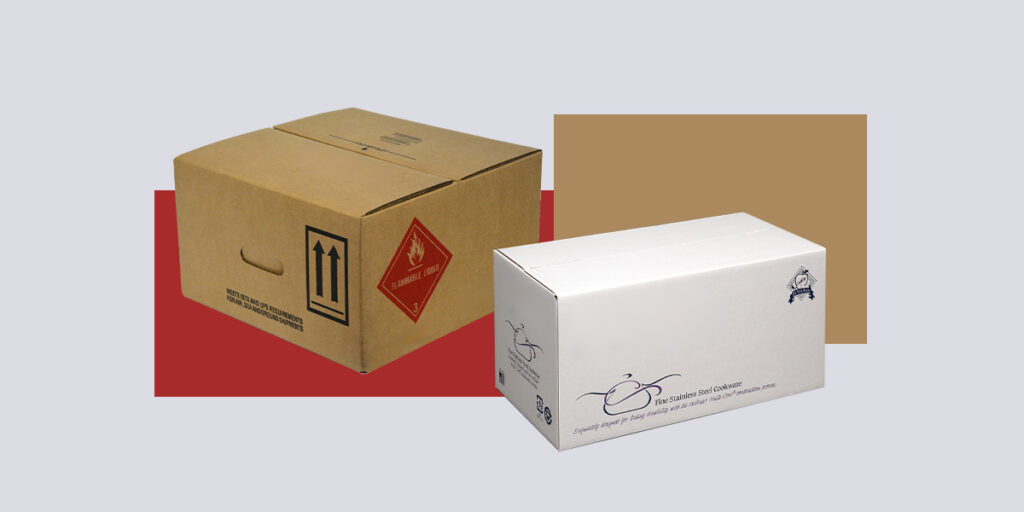
- Making sure that boxes that previously held hazardous materials or alcohol have all regulatory markings removed or made unreadable unless your new shipment matches those requirements.
Assessing Box Quality for Commercial Reuse
Before reusing shipping boxes, thoroughly check them to confirm whether they can withstand another distribution cycle. Relying solely on visual inspection can overlook structural damage that may later cause shipment failures.
Assessment systems should include the following:
- ECT verification: Check the box maker’s certification stamp on the bottom or side flaps of the cardboard box. The edge crush test rating must match your product weight and stacking requirements. Boxes with unreadable stamps or ratings below your needs will fail under palletized transport loads.
- Structural integrity: Apply moderate thumb pressure to all panels and corners. Feel for soft spots, buckling or accordion-like deformation along the edges. These indicate crushed flutes, which result in permanent damage that reduces compression resistance below safe reuse thresholds. Even minor flute damage compromises the entire box’s load-bearing capacity.
- Moisture and contamination: Moisture damage poses greater risks than mechanical stress. Look for discoloration, oil stains, mold or persistent odors. These indicate moisture saturation that can reduce compression by up to 50%. Boxes exposed to humidity or water damage can’t be safely reused, regardless of their apparent structural condition.
- Flap condition: Examine all flaps for tears, warping or misalignment. Damaged flaps prevent proper sealing and create instability in stacked pallets. Poor flap integrity increases product shifting during transport and warehousing.
How to Reuse Boxes for Shipping
Reusing boxes for shipping works most effectively when you follow a consistent preparation process. Each of the following steps helps prevent common problems that can occur when boxes are shipped multiple times.
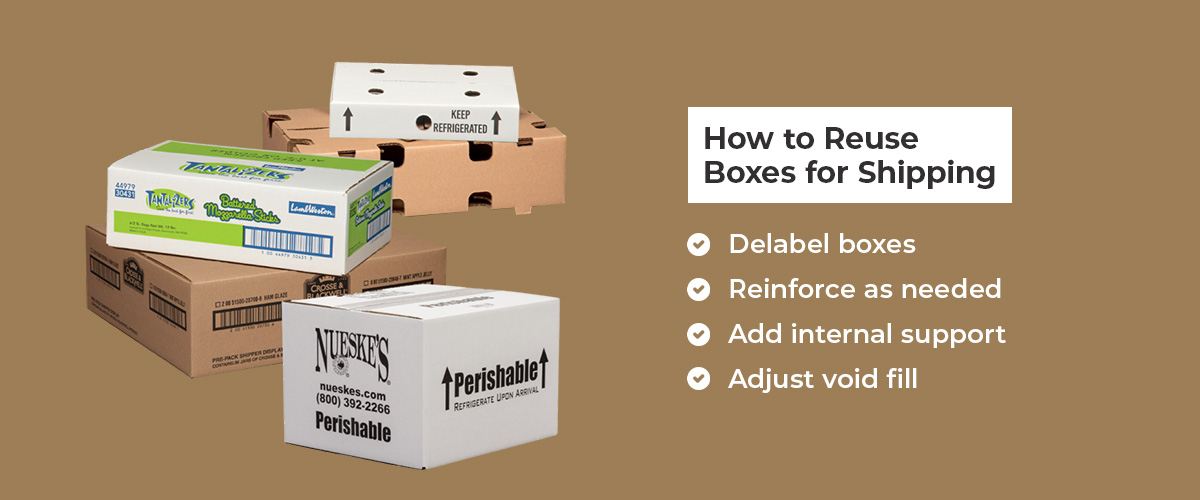
- Delabel boxes: Completely remove all previous shipping labels. Automated scanners can read old barcodes through marker ink or partial label removal, which can cause routing errors. Cover any residual adhesive or label fragments with opaque labels verified for print quality.
- Reinforce as needed: Apply the H-tape method to seal the center seam and both end seams on the top and bottom panels. Use high-tensile pressure-sensitive tape rated for your shipping weight. This technique helps improve the durability of boxes by strengthening areas that may have been weakened by previous tape removal and handling abrasion.
- Add internal support: Add corrugated partitions, pads or corner posts to redistribute loads away from possible fatigued panels. This internal reinforcement maintains compression performance while preserving the box’s dimensional stability across multiple uses.
- Adjust void fill: Used boxes often experience minor dimensional expansion. Increase dunnage volume or adjust foam density to eliminate product movement. Proper void fill prevents impact from contents shifting during vibration and handling.
Challenges in Managing Reusable Inventory
Running a box reuse program creates logistical challenges that need organized systems to control costs and maintain quality. The following issues may arise when managing your inventory of reusable shipping boxes:
- Reverse logistics complexity: In e-commerce and omnichannel operations, retrieving used boxes from customers requires a reliable return and collection system. Programs work best when orders and returns flow through the same fulfillment centers or standardized drop-off points.
- Standardization issues: Mixing different box sizes creates unstable pallets. Mismatched dimensions and varying strength ratings distribute weight unevenly, causing loads to collapse. Grouping reused shipping boxes by size and crush-test rating keeps stacks stable and prevents failures.
- Tracking the life cycle: Tracking usage prevents boxes from wearing out during shipment. Mark each corrugated cardboard box with a stamp or tick after each use. Retire boxes to recycling after two to three trips to avoid strength loss and potential carrier rejection.
- Storage degradation: Moisture, temperature changes and sitting directly on floors weaken the cardboard and cause layers to separate. Boxes often fail before their second shipment when warehouses lack climate control or store them incorrectly.
Storing Boxes to Maintain Box Usability
How you store boxes determines whether they stay strong enough for another shipment or weaken before you can use them again. Use these practices to extend the life of the cardboard boxes in your warehouse:
- Flat stacking protocol: Flatten boxes and stack them face down on pallets to keep the internal ridges aligned and panels straight. Storing boxes upright or unevenly bends the internal structure and permanently weakens their stacking strength.
- Humidity control: Always keep boxes off the floor using pallets or protective sheets. Concrete pulls moisture upward into the cardboard, causing the layers to separate even in climate-controlled warehouses.
- Banding pressure: Overtightening straps crushes box edges and destroys load-bearing strength before you reuse the box. Use just enough tension to secure the stack without denting corners or warping panels.
Reusing Shipping Boxes for Sustainable Success
Reusing boxes for shipping can create real friction. When there’s no clear process, problems begin to emerge. You see avoidable damage, operations slow down, and your packaging stops reflecting your brand. Pressure to reduce waste and control material costs continues to rise, so ignoring a messy reuse setup is no longer realistic for a growing business.
Great Northern Packaging gives you structure. You get design expertise and practical guidelines, making reusing shipping boxes a dependable option. With a clear framework, your team can protect products, support sustainability goals and keep packaging consistent from order to order.
Contact us if you’re ready to upgrade from ad hoc box reuse to a more robust reusable packaging approach. We’ll help you explore the right reusable materials to help you cut waste, control costs and ship with more confidence.